

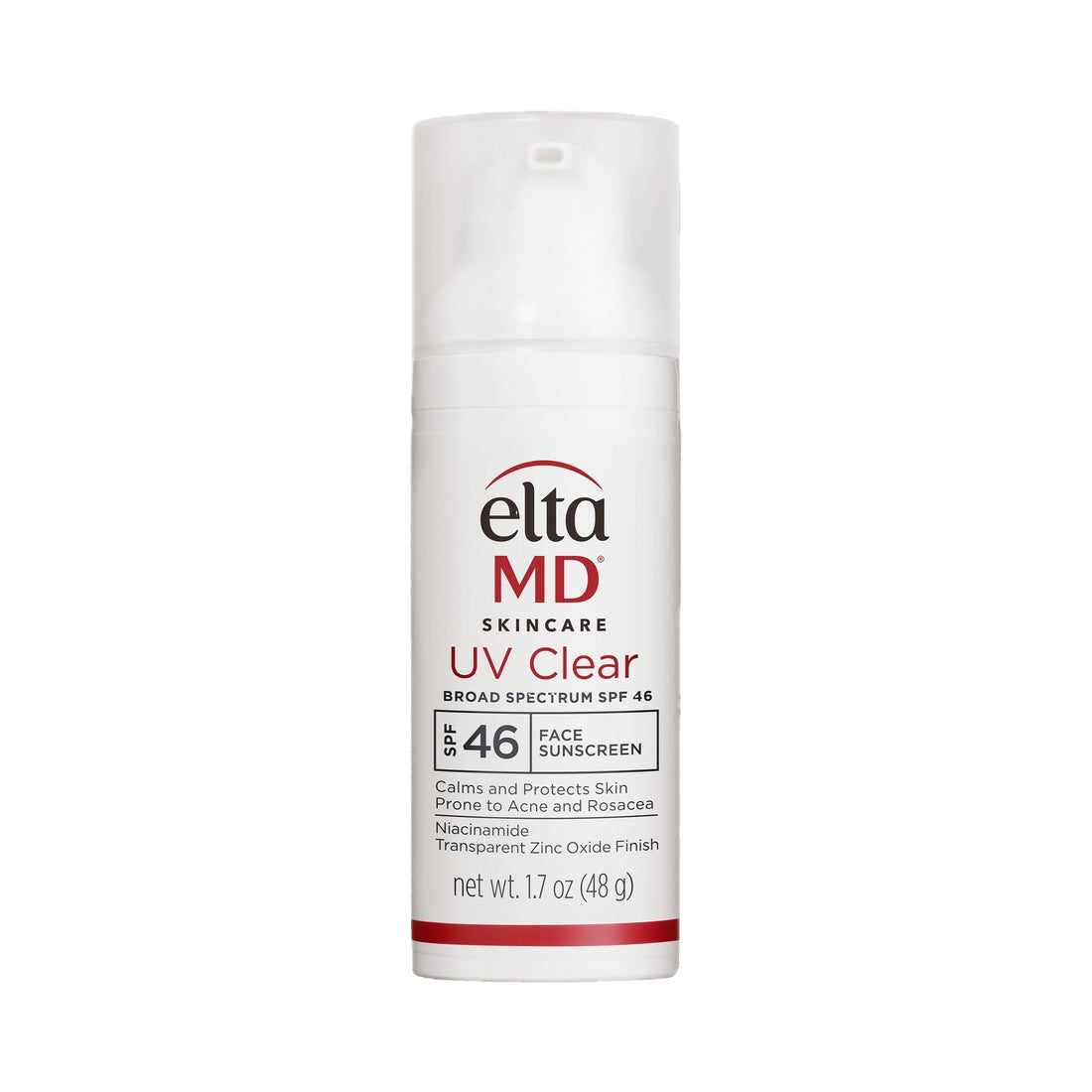
UV Clear Broad-Spectrum SPF 46
- Regular price
-
$45.00 - Regular price
-
- Sale price
-
$45.00
✓ Expert Curated by Licensed Estheticians · ✓ Ships in 1 to 2 Business Days · ✓ Free Shipping on Orders $50+
Light, oil free protection for skin that runs oily.
Your skin runs oily or breaks out easily, and you want a sunscreen you stop noticing by mid morning and happily put back on in the afternoon.
UV Clear gives you broad spectrum SPF 46 in an oil free lotion light enough to wear alone, under makeup, or over your morning layers when it is time to reapply. Zinc oxide leads the protection across UVA and UVB, and niacinamide supports a calmer, more even look. EltaMD formulates it for sensitive skin and skin that gets congested.
Who It Is For
Oily, sensitive or congested skin, and anyone who wants an easy sunscreen to top up through the day.
Acne Safe
What You Will See, and When
The light, clear finish is there the moment it goes on. The niacinamide benefit to the look of redness and uneven tone builds over weeks of daily use.
How to Use
Every morning, whatever the weather and whether or not you leave the house, apply two finger lengths to face and neck as your last skincare step. Reapply at least every two hours, indoors and by a window too, because the film wears off through the day. Tie it to washing your hands, and keep one by the sink and one in your bag.
The Science
The SPF number measures UVB, the light that burns. Broad spectrum means UVA is covered too, and UVA is the one that stays steady all year, passes through cloud and window glass, and reaches the depth where collagen sits. Zinc oxide absorbs and scatters light across the full UVB and UVA range and stays stable in sunlight.
SPF is measured in the lab at 2 mg of sunscreen per square centimeter of skin. In a study of real application, using half that amount brought the SPF down to roughly its square root, and a quarter of it brought it down to roughly its fourth root. Protection drops faster than the amount you skip, which is why the amount matters as much as the number on the tube. Reapplication matters for the same reason: the film wears off with time, touch and sweat, whatever the weather.
Niacinamide is vitamin B3. In a 12 week randomized, double blind split face study, 5% topical niacinamide visibly reduced red blotchiness, dark spots and fine lines compared with its base cream. EltaMD uses the same 5% here.
Questions
Why a Routine Made for You Works Better
General advice is written for everyone, so it has to assume nothing about you. It can tell you what is safe. It cannot tell you what will work for your skin.
Skin changes when it is challenged just enough, then given time to recover and adapt. That amount is different for every person, and it moves as your skin gets stronger. Ask too much and your skin spends its energy recovering instead of improving. Ask too little and nothing changes. Finding that point for you, and moving it at the right time, is where results come from.
Where that point sits depends on:
- Your skin: its history, how it reacts, and what it is doing today
- Your health: hormones, medications, pregnancy and any condition that changes how skin behaves
- Your lifestyle: sleep, stress, diet, sun, exercise and climate
- Your routine: what you use now, and what has and has not worked before
- Your goals: what you most want to change
- Your expectations and timeline: how soon you want to see change, and what is realistic for your skin
- Your consistency: how much time and how many steps you will keep up with, because the best routine is the one you actually do
- Your treatments: what you have had and what you have planned
A skin therapist weighs all of this, builds a routine you can keep, and adjusts it as your skin responds. That is why we guarantee our products when they are part of a routine designed by one of our skin therapists. If you have been reading general advice, bring your questions. We will help you sort out what applies to you and what does not.
Key Ingredients
Full Ingredient List
Active ingredients: Zinc Oxide 9.0%, Octinoxate 7.5%. Inactive ingredients: Purified Water, Cyclopentasiloxane, Niacinamide, Octyldodecyl Neopentanoate, Hydroxyethyl Acrylate/Sodium Acryloyldimethyl Taurate Copolymer, Polyisobutene, PEG-7 Trimethylolpropane Coconut Ether, Sodium Hyaluronate, Tocopheryl Acetate, Lactic Acid, Oleth-3 Phosphate, Phenoxyethanol, Butylene Glycol, Iodopropynyl Butylcarbamate, Triethoxycaprylylsilane.
References
1. Mitchnick MA, Fairhurst D, Pinnell SR. Microfine zinc oxide (Z-cote) as a photostable UVA/UVB sunblock agent. J Am Acad Dermatol. 1999;40(1):85-90. doi:10.1016/s0190-9622(99)70532-3
2. Faurschou A, Wulf HC. The relation between sun protection factor and amount of sunscreen applied in vivo. Br J Dermatol. 2007;156(4):716-719. doi:10.1111/j.1365-2133.2006.07684.x
3. Bissett DL, Oblong JE, Berge CA. Niacinamide: a B vitamin that improves aging facial skin appearance. Dermatol Surg. 2005;31(7 Pt 2):860-865. doi:10.1111/j.1524-4725.2005.31732
4. Diffey BL. When should sunscreen be reapplied? J Am Acad Dermatol. 2001;45(6):882-885. doi:10.1067/mjd.2001.117385
5. EltaMD. UV Clear SPF46 Drug Facts label, DailyMed setid 60438ec5-0b1f-45fd-8ce4-debfdbdc6721, updated June 4, 2025 (brand label data).
Couldn't load pickup availability
-
Hurry, only 19 items left in stock!


Frequently Bought Together
-
PRELUDE Facial Treatment Cleanser
 Vendor:PRELUDE Facial Treatment CleanserHydrinity
- Regular price
-
$58.00 - Regular price
-
- Sale price
-
$58.00


Total for In Stock Items: $418.00
Your Complete Routine
Skin that gets congested or inflamed? Try this routine.
-
Step 1: Cleanse
PRELUDE Facial Treatment CleanserVendor:PRELUDE Facial Treatment CleanserHydrinity- Regular price
-
$58.00 - Regular price
-
- Sale price
-
$58.00
-
Step 2: Exfoliate
-
Step 3: Right After Cleansing
-
Step 4: Treatment Serum
-
Step 5: Vitamin C Every Morning
Pro-Heal Serum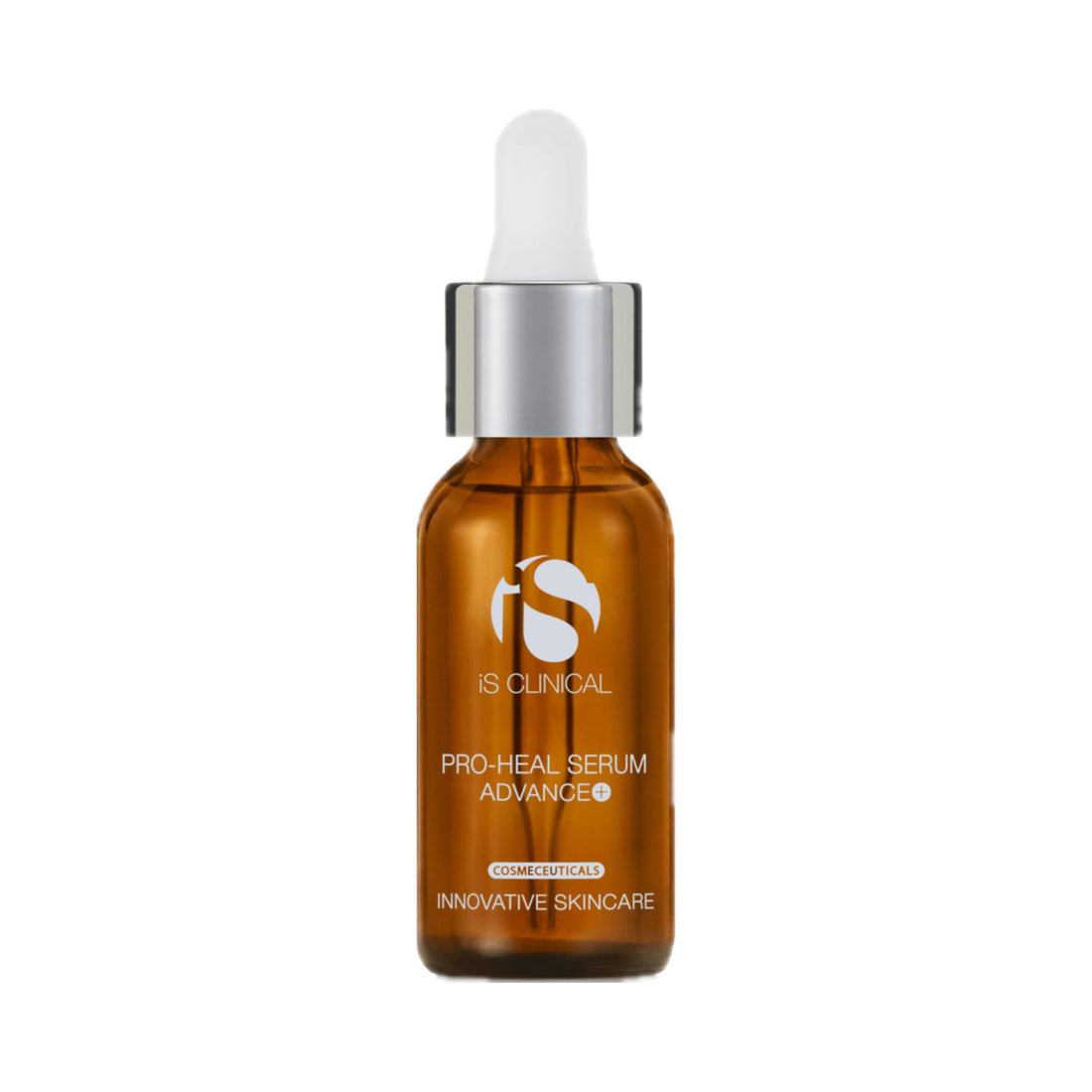 Vendor:Pro-Heal SerumiS Clinical
- Regular price
-
$99.00 $165.00 - Regular price
-
- Sale price
-
$99.00 $165.00
-
Step 6: Moisturize
-
Step 7: Sunscreen Every Morning